The short version
A useful niche report explains how the creator sample was chosen, what signals were compared and where public data was incomplete.
Define what you mean by the niche
Write down the audience and the problem or interest you want to explore. “Fitness” is broad; “short home workouts for people with limited equipment” gives you a better search starting point. Include adjacent phrases because creators may describe the same topic in different ways.
Decide what a promising opportunity means for this project. A creator campaign may prioritise audience fit and recent consistency. A content idea may prioritise active conversations and repeatable formats. The score should follow the question, not replace it.
Build a sample you can actually inspect
Collect a manageable group of public profiles from several related searches. Include smaller and larger accounts, and note why each one made the list. If every result comes from one keyword or one viral sound, the sample will inherit that bias.
For each profile, review recent videos, not only lifetime totals. Look for recurring formats, posting cadence, typical view ranges and how audience reactions vary from post to post. Save profiles you may want to revisit so the comparison does not disappear into browser tabs.
- Use the same recent-video window where possible.
- Record the query or topic that surfaced each creator.
- Flag missing videos or partial public data before comparing totals.
Read the signals together
Follower count describes audience size, not current momentum. Pair it with recent views, engagement by views, posting consistency and growth. A creator with a smaller following may have a stronger recent fit for a very specific topic; the data gives you a reason to look closer, not an automatic winner.
Revenue estimates can help with planning, but they are scenarios based on public views and an RPM assumption. They do not reveal sponsorship fees, affiliate income or actual payouts. Keep those questions separate when preparing a shortlist.
Turn the research into a shortlist
Keep a short note beside each profile: what makes it relevant, what you still need to verify and what would make you remove it. This small habit makes a shortlist easier to share and saves you from repeating the same search next week.
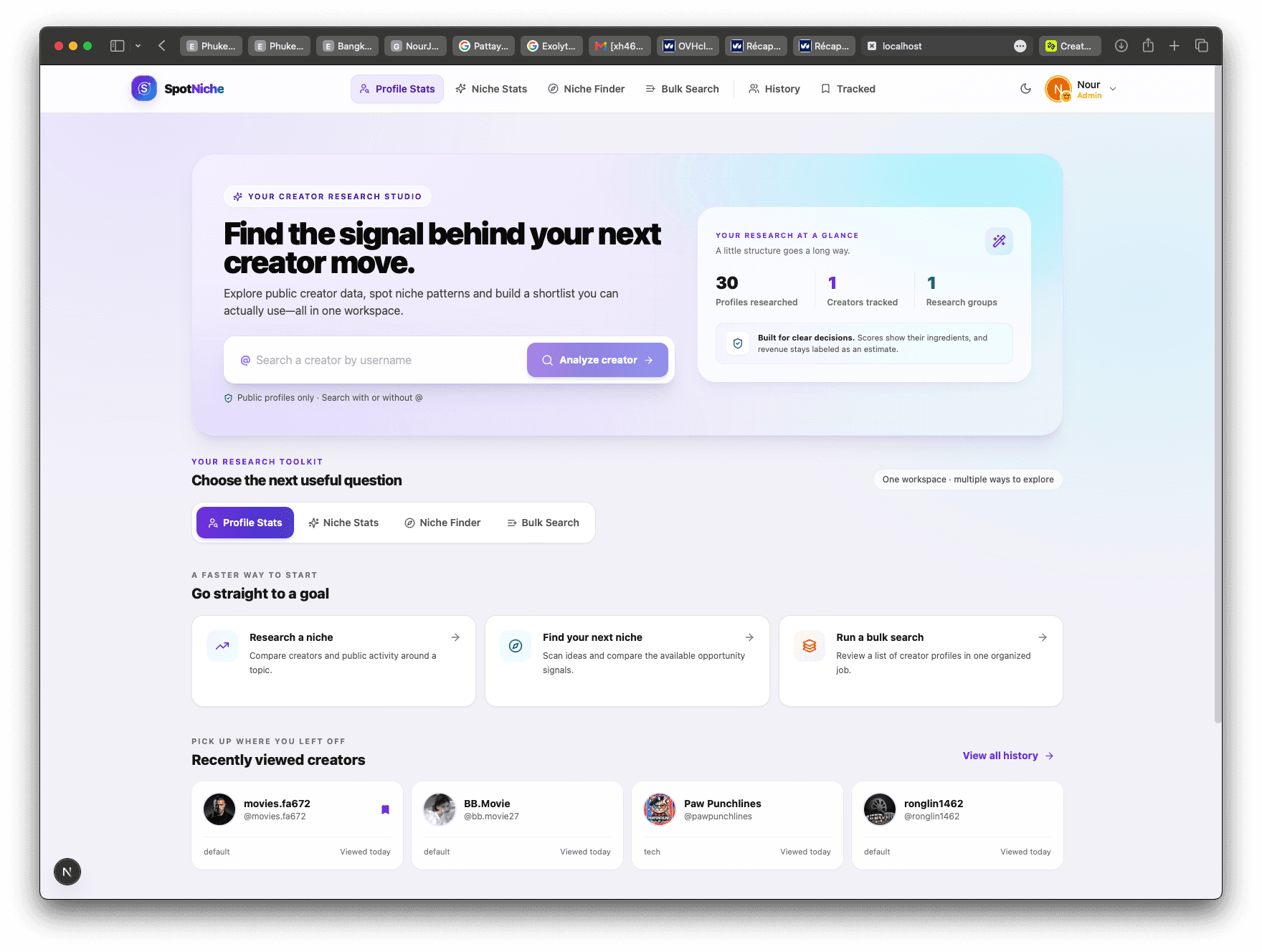
SpotNiche brings creator stats, niche discovery, bulk profile review and tracking into one workspace. Try a free tool first, then use the dashboard when you want to compare a set of profiles and keep your research history together.
Put this into practice
Turn the sample into a shortlist you can revisit.
Start with a free tool, then use SpotNiche to compare creators, save the profiles worth a closer look and keep your research notes together.